
NRC Rubber-Stamps Relicensing for Aging U.S. Nuclear Plants
Submitted by Anne Landman on
 Most nuclear reactors built in the U.S. in the 1960s and 1970s were explicitly designed to last for 40 years, but an Associated Press investigation shows that owners of aging nuclear plants and their government regulators are now claiming the aging reactors actually have no particular life span, and can even operate for up to 100 years. AP found the Nuclear Regulatory Commission's (NRC) relicensing rules contain no requirements that operators compensate for wear and tear on their reactors, and that the relicensing process relies heavily on paperwork supplied by operators and very little actual visual inspection of plants. AP also found that the NRC has repeatedly made compromises in plant safety rules, emergency planning and regulations to keep older reactors operating. The NRC's relicensing audits for aging plants often contain "identical or nearly identical word-for-word repetition" of the language supplied by operators in their license renewal applications. Despite the fact that repeated equipment failures have occurred at U.S. nuclear plants, relicensing the plants has become little more than a rote, rubber-stamp procedure. Joe Hopenfeld, a former NRC engineer who worked on issues pertaining to plant aging prior to retiring in 2008, corroborates AP's findings. "Everything I've seen [in regard to relicensing] is rubber-stamped," Hopenfeld confirms.
 On June 8,
  Under
Under  Of the many supporters of a
  A 33 year old Pakistani computer programmer who lives near Osama bin Laden's hideout unknowingly first broke the news about the U.S. raid on bin Laden's compound after he tweeted about hearing a helicopter hovering over the area at 1:00 a.m., saying it was an unusual event for his town, Abbottabad. Sohaib Athar subsequently tweeted that he heard a "huge window shaking bang" which turned out to be a U.S. helicopter crashing nearby. The copter apparently had mechanical difficulties and was intentionally blown up by its crew. Athar reported on the
 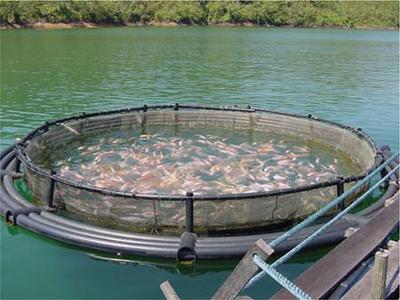 The National Oceanic and Atmospheric Administration (NOAA) oversees aquaculture, or fish farming, in the U.S., both in freshwater and marine environments. Since the U.S. imports 84 percent of its seafood, about half of which is farmed, there is need for growth in the domestic fish-farming industry. Thus the NOAA has proposed a set of
  The
The 