New Film on Controversial Wisconsin Mine to Tour State
Since 2011, a fight has been raging over a proposed open pit iron mine in northern Wisconsin.

Since 2011, a fight has been raging over a proposed open pit iron mine in northern Wisconsin.
Bill Moyers profiles Wendell Berry, one of America's most influential writers, on an edition of his show Moyers & Company, which will be available on local public television stations starting on October 4, 2013.
Submitted by Anne Landman on
 The travel website Kayak.com and Lowes Hardware stores pulled advertising from TLC's reality show All-American Muslim after the right-wing Florida Family Association (FFA) complained that the show presented Muslim-American families as ordinary people. FFA, disturbed by the normative portrayal of American Muslims, complained on its website that "The point of the show is to depict Muslims as ordinary folks just like you and me who are subjected to unjust suspicion," and saying the show is "propaganda clearly designed to counter legitimate and present-day concerns about many Muslims who are advancing Islamic fundamentalism and Sharia law." FFA maintained that the show was an attempt "to manipulate Americans into ignoring the threat of jihad." The group started pressuring advertisers to drop their sponsorship of the show. The CEO of Kayak.com, which dropped its ads, claimed that no third party had influenced their decision to discontinue advertising on the show. A Kayak.com executive claimed TLC had misled them about the nature of the show, and added, "...Mostly, I just thought the show sucked." Lowes responded to FFA saying the show did not "meet Lowe's advertising guidelines." The chain issued a more ambiguous public statement saying the company had a "long-standing commitment to diversity and inclusion," and saying the show had turned into "a lightning rod for people to voice complaints from a variety of perspectives - political, social and otherwise."
After Lowe’s made it public that it had pulled its ads, boycotts have been called, protests planned, 200,000 petitions have been delivered by local religious leaders, a spoof Lowes TV ad has gone viral and hip-hop mogul Russell Simmons offered to buy the remaining advertising on the show.
 The "World's Largest Brat Fest," which will take place over Memorial Day weekend at Willow Island at the Alliant Energy Center, will serve brats donated by Johnsonville Sausage of Sheboygan Falls, WI. Johnsonville owners (the Stayer and Stayer-Maloney families) and other principals of Johnsonville Sausage contributed a total of $48,450 to Scott Walker's gubernatorial and other 2010 Republican state campaigns, according to the Wisconsin Democracy Campaign's Campaign Finance Database.
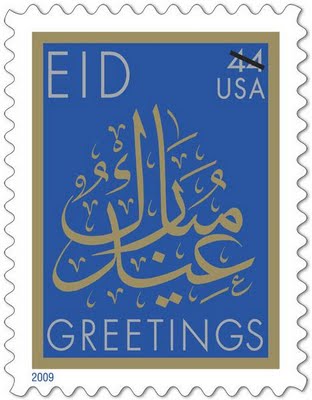 A year-old, anti-Muslim email has resurfaced and is curculating once again, riding the latest wave of U.S. anti-Muslim bigotry. The email urges people to boycott a U.S. postage stamp that recognizes the Islamic holiday of Eid. The stamp, which rumor-mongers mistakenly refer to as a "Muslim Christmas Stamp," was first issued about ten years ago, and is one of six seasonal postage stamps the United States Postal Service sells that commemorate Hanukkah, Christmas, Kwanzaa, Eid, snowmen and music makers. The email was first sent around a year ago by John Piper, the mayor of Clarksville, Tennessee. In it, Piper urged "all patriotic Americans" to protest a U.S. postage stamp commemorating the Islamic holiday of Eid. Piper accused "Muslim Communist" President Obama of ordering the stamp's creation. The stamp was, in fact, created during the George W. Bush administration. A similar stamp, sort of an Arabic Valentine's Day stamp with hearts and a butterfly on it, is also mentioned in the email. That stamp was created on a Web site called Zazzle, that lets people create their own custom stamps, and is not issued by the USPS. Snopes.com recently updated its page debunking this rumor. The USPS's holiday stamps are available here.
 The 2010 World Cup in South Africa was going to be a shining moment for Africa, but things haven't exactly gone according to plan. Of the tournament's six African teams, all but Ghana have been eliminated early. Half-empty stadiums early in the tournament suggest that the glittering architectural showpieces of the World Cup will quickly become albatrosses. A team of foreigners will leave South Africa with a trophy, and soccer's international master, FIFA will make billions. The people of South Africa will receive far less. The disappointments of the World Cup are clearest in the sad saga of Stallion Security.
Submitted by Anne Landman on
 Critics are saying that the new movie Sex and the City 2 may have jumped the shark, if not with it's plot, then with its endless commercial tie-ins, gratuitous product placement and the amount of sheer hype tied to the show.
Submitted by Diane Farsetta on
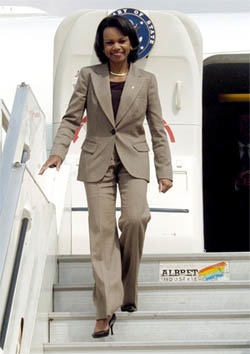 Former Secretary of State Condoleezza Rice has signed with the William Morris Agency, which describes itself as a "diversified talent and literary agency," with "clients in all segments of the entertainment industry." While "most other members of the
Submitted by Anne Landman on
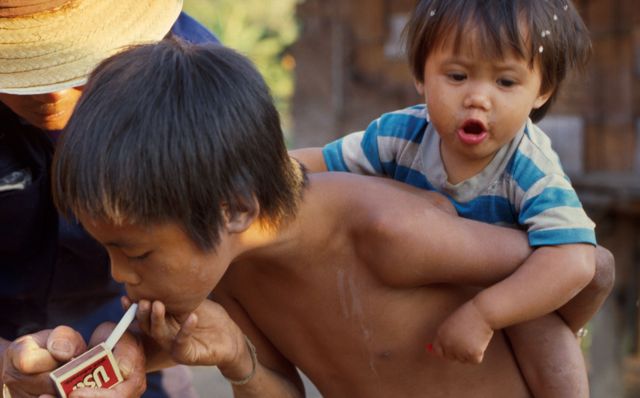 Philip Morris and the tobacco industry in general have long insisted that ci
Submitted by Anne Landman on
 Last month, when pop singer Alicia Keys protested Philip Morris International's (PMI) sponsorship of her concert in Jakarta, Indonesia, PMI was forced to pull down posters and billboards that promoted the event.

Center for Media and Democracy (CMD)
520 University Ave, Ste 305 • Madison, WI 53703 • (608) 260-9713
CMD is a 501(c)(3) tax-exempt non-profit.
© 1993-2025